
Piriformis Syndrome: A Comprehensive Guide & NHS Exercises
Navigating piriformis syndrome requires understanding rehabilitation; the NHS provides downloadable exercise PDFs detailing stretches and strengthening routines.
These resources focus on supine piriformis stretches, hip rotations, and gluteal exercises for effective pain management and recovery.
Accessing these NHS guides empowers individuals to actively participate in their treatment and improve functional movement patterns.
Understanding Piriformis Syndrome

Piriformis syndrome arises when the piriformis muscle, located deep in the buttock, irritates the sciatic nerve. This irritation can cause pain, numbness, and tingling radiating down the leg, mimicking sciatica. However, unlike typical sciatica caused by a spinal issue, piriformis syndrome originates from the muscle itself.
The NHS recognizes this distinct condition and offers guidance, often including downloadable exercise PDFs, to manage symptoms. These PDFs typically detail a phased approach to rehabilitation. Initial phases emphasize gentle stretching to release tension in the piriformis muscle and improve hip mobility. Subsequent phases introduce strengthening exercises targeting the glutes and core to provide support and stability.
Understanding the root cause – muscle imbalance and nerve compression – is crucial. The NHS approach, detailed in these resources, aims to restore proper biomechanics and alleviate pressure on the sciatic nerve. Consistent adherence to the prescribed exercises, as outlined in the PDFs, is key to successful management and preventing recurrence.
What is the Piriformis Muscle?
The piriformis muscle is a small, pear-shaped muscle located deep within the buttock, playing a vital role in hip rotation and external leg movement. It originates from the sacrum (the base of the spine) and attaches to the greater trochanter of the femur (thigh bone). Its primary function is to rotate the hip outward, but it also contributes to hip abduction and stabilization.
Crucially, the sciatic nerve often passes through or under the piriformis muscle, making it vulnerable to compression. When the piriformis muscle becomes tight or spasmed, it can irritate the sciatic nerve, leading to piriformis syndrome. The NHS acknowledges this anatomical relationship and incorporates exercises into their downloadable PDFs designed to address this potential compression.
These exercises focus on lengthening and releasing the piriformis muscle, restoring its normal function and alleviating pressure on the nerve. Understanding the muscle’s location and function is essential for performing the exercises correctly and maximizing their therapeutic benefit, as detailed within the NHS resources.
Causes of Piriformis Syndrome
Piriformis syndrome arises from the compression or irritation of the sciatic nerve by the piriformis muscle, stemming from various factors. Prolonged sitting, particularly with poor posture, is a significant contributor, as it can shorten and tighten the muscle. Repetitive motions, like running or cycling, can also lead to muscle imbalances and subsequent irritation.
Anatomical variations, where the sciatic nerve passes directly through the piriformis muscle instead of underneath it, increase susceptibility. Direct trauma to the buttock or hip area can initiate the condition, as can muscle spasms due to overuse or strain.

The NHS exercise PDFs address these causes by providing targeted stretches and strengthening routines. These aim to restore muscle balance, improve flexibility, and alleviate nerve compression. Understanding these underlying causes is crucial for effective management and prevention, complementing the exercises provided by the NHS for optimal recovery.
Symptoms of Piriformis Syndrome
Piriformis syndrome manifests with pain in the buttock, often radiating down the sciatic nerve into the hip, thigh, and even the calf. This pain typically worsens with prolonged sitting, climbing stairs, or running. Individuals may experience numbness or tingling sensations along the sciatic nerve pathway, mimicking sciatica.
Pain can be aggravated by activities that contract the piriformis muscle, such as deep squats or hip adduction. Some individuals report a feeling of tightness or spasm in the buttock region. The NHS exercise PDFs directly address these symptoms by offering targeted stretches and strengthening exercises.
These routines aim to relieve nerve compression, reduce muscle tension, and improve overall function. Recognizing these symptoms is the first step towards seeking appropriate treatment and utilizing the NHS-provided resources for effective pain management and rehabilitation.

Diagnosis & Assessment (NHS Approach)
The NHS employs physical examination and patient history to diagnose piriformis syndrome, often referencing exercise PDFs.
Ruling out sciatica and back pain is crucial before recommending targeted stretches and strengthening routines.
How is Piriformis Syndrome Diagnosed by the NHS?
The National Health Service (NHS) diagnosis of piriformis syndrome relies heavily on a thorough clinical assessment, carefully differentiating it from more common conditions like sciatica or lower back pain. A healthcare professional will begin with a detailed patient history, inquiring about the nature of the pain, its location, aggravating and relieving factors, and any associated symptoms.
Physical examination is paramount, involving several specific tests designed to provoke pain in the piriformis muscle. These include the FAIR test (Flexion, Adduction, Internal Rotation) and the Pace’s sign, where resisted external rotation of the hip can elicit discomfort. The NHS doesn’t immediately jump to imaging; instead, they prioritize clinical findings.
While imaging like MRI scans might be used to rule out other causes, they aren’t definitive for piriformis syndrome itself. The NHS often utilizes downloadable exercise PDFs as part of the assessment process, observing how a patient responds to initial gentle stretches and mobility exercises. Positive responses to these exercises can support the diagnosis, indicating that the piriformis muscle is indeed involved. A careful, considered approach is key to accurate diagnosis and appropriate management.
Ruling Out Other Conditions (Sciatica, Back Pain)
The NHS emphasizes differentiating piriformis syndrome from sciatica and lower back pain, as symptoms can significantly overlap. Sciatica, often caused by disc herniation, typically presents with pain radiating down the leg, accompanied by neurological symptoms like numbness or weakness – features less common in piriformis syndrome.
A thorough neurological examination helps distinguish between the two. Back pain, conversely, is usually localized and aggravated by movement of the spine, unlike the deep buttock pain characteristic of piriformis syndrome. The NHS employs specific orthopedic tests to assess spinal health and pinpoint the source of discomfort.
Interestingly, initial response to piriformis-focused exercises, found in downloadable PDFs, can aid in differentiation. If symptoms worsen with these exercises, another diagnosis is more likely. The NHS prioritizes a comprehensive evaluation, considering the patient’s history, physical findings, and response to conservative treatments before settling on a diagnosis. Ruling out these conditions is crucial for effective, targeted management.

NHS Recommended Exercises for Piriformis Syndrome
The NHS advocates a phased exercise approach, detailed in downloadable PDFs, starting with gentle stretches and progressing to strengthening and functional movements.
Phase 1: Gentle Stretching & Mobility
Initiating treatment, the NHS recommends a focus on gentle stretching and restoring mobility, often outlined in downloadable piriformis syndrome exercise PDFs. These initial exercises aim to alleviate muscle tension and reduce nerve compression without exacerbating symptoms.
Key exercises include the Supine Piriformis Stretch: lying on your back, bending both knees, and gently pulling one knee towards your chest while rotating the hip. The Kneeling Piriformis Stretch involves kneeling with one leg forward, gently leaning forward to feel a stretch in the gluteal region.
Finally, the Seated Piriformis Stretch can be performed by sitting with one leg crossed over the other, and gently leaning forward. These stretches should be held for 20-30 seconds, repeated several times, and performed slowly and cautiously. The NHS emphasizes listening to your body and stopping if you experience any sharp pain. Consistency is crucial during this phase, preparing the muscles for more advanced strengthening exercises.
Supine Piriformis Stretch
The Supine Piriformis Stretch, frequently detailed in NHS piriformis syndrome exercise PDFs, is a foundational exercise for relieving tension in the piriformis muscle. Begin by lying on your back with your knees bent and feet flat on the floor.
Cross your right ankle over your left knee, forming a figure-four shape. Gently pull your left thigh towards your chest, holding behind the thigh or over the shin – avoid pulling on the knee itself. You should feel a stretch deep in your right buttock.
Hold this stretch for 20-30 seconds, breathing deeply. Repeat 3-5 times on each side. The NHS advises performing this stretch slowly and cautiously, stopping immediately if you experience any sharp or increasing pain. Modifications include adjusting the intensity by varying how closely you pull your thigh to your chest. This stretch aims to lengthen the piriformis muscle and reduce pressure on the sciatic nerve.
Kneeling Piriformis Stretch
The Kneeling Piriformis Stretch, often illustrated in NHS-provided piriformis syndrome exercise PDFs, targets the muscle with a different angle than the supine version. Start in a kneeling position, with your left knee on the ground and your right foot flat on the floor in front of you, forming a 90-degree angle.
Gently lean forward, keeping your back straight and core engaged. You should feel a stretch in your left buttock. To deepen the stretch, gently push your left hip backward. Avoid rounding your back or forcing the stretch.
Hold the stretch for 20-30 seconds, breathing deeply. Repeat 3-5 times on each side. The NHS emphasizes maintaining proper form to prevent injury. This stretch is particularly effective for individuals who find the supine stretch uncomfortable. It’s crucial to listen to your body and stop if you experience any pain beyond a gentle stretch.
Seated Piriformis Stretch
The Seated Piriformis Stretch, frequently detailed within NHS piriformis syndrome exercise PDFs, offers a convenient option for those preferring a seated position. Begin by sitting on a chair with your feet flat on the floor. Cross your right ankle over your left knee, forming a figure-four shape.
Maintain a straight back and gently lean forward from your hips, keeping your core engaged. You should feel a stretch in your right buttock. Avoid rounding your back or forcing the movement. The intensity of the stretch can be adjusted by how far you lean forward.
Hold this position for 20-30 seconds, focusing on deep, controlled breathing. Repeat 3-5 times on each side. The NHS guidelines stress the importance of a controlled stretch, avoiding any bouncing or jerky motions. This stretch is easily incorporated into daily routines and is beneficial for improving flexibility.
Phase 2: Strengthening Exercises
Following the initial mobility phase, NHS piriformis syndrome exercise PDFs emphasize strengthening the surrounding musculature. This phase aims to improve stability and support the piriformis muscle, reducing strain and preventing recurrence. Key exercises include gluteal strengthening, hip abduction, and clam shells.
Gluteal bridges are foundational, activating the glutes and hamstrings. Hip abduction exercises, often performed with a resistance band, target the gluteus medius, crucial for hip stabilization. Clam shells further isolate the gluteus medius, enhancing control.
The NHS recommends performing 3 sets of 10-15 repetitions for each exercise. Proper form is paramount; focus on controlled movements and engaging the correct muscles. Strengthening these areas helps restore biomechanical balance and supports long-term recovery, as detailed in the downloadable resources.
Gluteal Strengthening Exercises (Bridge)
The gluteal bridge is a cornerstone exercise within NHS-recommended piriformis syndrome rehabilitation programs, frequently detailed in downloadable PDFs. This exercise effectively strengthens the gluteus maximus, hamstrings, and core, providing crucial support for the pelvis and lower back.
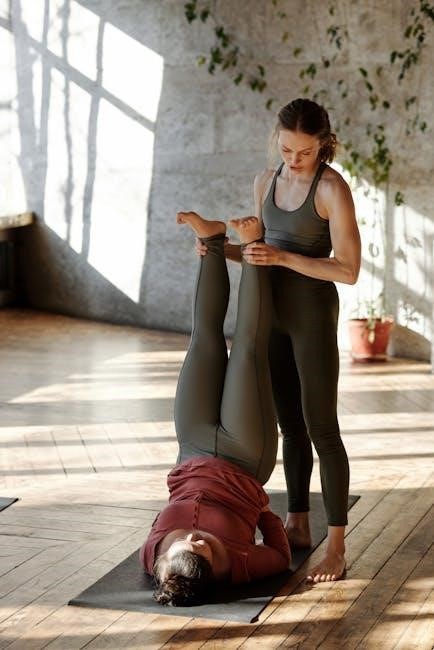
To perform a bridge, lie on your back with knees bent and feet flat on the floor. Engage your core and glutes, then lift your hips off the ground, forming a straight line from shoulders to knees. Hold for a few seconds, squeezing the glutes at the top, before slowly lowering back down.
NHS guidance suggests 3 sets of 10-15 repetitions. Variations, like single-leg bridges, can increase the challenge. Proper form—avoiding arching the back—is vital. This exercise improves hip extension and stability, directly addressing biomechanical imbalances contributing to piriformis syndrome.
Hip Abduction Exercises
Hip abduction exercises are frequently included in NHS piriformis syndrome rehabilitation PDFs, aiming to strengthen the gluteus medius – a key muscle for pelvic stability. Weakness in this muscle can contribute to altered movement patterns and exacerbate piriformis irritation.
A common exercise involves lying on your side with legs straight. Slowly lift your top leg towards the ceiling, keeping your knee straight and core engaged. Avoid rotating your hip; focus on a controlled, upward movement. Lower the leg slowly back to the starting position.
NHS resources typically recommend 3 sets of 10-15 repetitions on each leg. Resistance bands can be added around the ankles for increased challenge. Strengthening the hip abductors helps restore proper biomechanics, reducing stress on the piriformis muscle and alleviating pain.
Clam Shell Exercises
Clam shell exercises are a staple in NHS-recommended piriformis syndrome rehabilitation programs, often detailed within downloadable exercise PDFs. They specifically target the gluteus medius and minimus, crucial for hip stabilization and external rotation – movements often compromised in piriformis syndrome.
To perform the exercise, lie on your side with knees bent and feet stacked. Keeping your feet together, lift your top knee away from the bottom knee, like opening a clam shell. Maintain a neutral spine and avoid arching your back. Focus on squeezing your gluteal muscles throughout the movement.
NHS guidelines generally suggest 3 sets of 12-15 repetitions on each side. Resistance bands placed around the thighs can increase the intensity. These exercises improve hip control, reduce compensatory movements, and ultimately alleviate pressure on the piriformis muscle, promoting pain relief and improved function.
Phase 3: Advanced Exercises & Functional Movements
Progressing to Phase 3, as outlined in NHS piriformis syndrome exercise PDFs, involves integrating functional movements and advanced exercises to restore full capacity. This stage builds upon the foundation of stretching and strengthening established in earlier phases.
Single leg deadlifts challenge balance and engage the glutes and hamstrings, promoting hip stability. Squats, performed with conscious glute activation, reinforce proper movement patterns. These exercises mimic everyday activities, preparing the body for real-world demands.
NHS resources emphasize controlled movements and proper form to prevent re-injury. The focus shifts from isolated muscle work to integrated, whole-body movements. Gradual progression is key, increasing resistance or complexity only when comfortable. This phase aims to return individuals to their desired activity levels pain-free and with improved functional capacity.
Single Leg Deadlifts
NHS piriformis syndrome exercise PDFs often incorporate single leg deadlifts as a progressive exercise, enhancing stability and strengthening key muscle groups. This movement targets the glutes, hamstrings, and core, all crucial for pelvic and hip control.
To perform, stand with feet hip-width apart, then hinge at the hips while lifting one leg straight back. Maintain a straight spine and engage your core throughout the movement. Lower the torso towards the ground, keeping the back flat, and feeling a stretch in the hamstring of the supporting leg.
The NHS guidance stresses controlled descent and ascent, prioritizing form over range of motion. Start with a small range and gradually increase as strength improves. Modifications, like using a light weight or performing the exercise with back support, can be implemented as needed. This exercise improves functional movement and reduces strain on the piriformis muscle.
Squats with Focus on Glute Activation
NHS piriformis syndrome exercise PDFs emphasize proper squat technique, specifically focusing on gluteal muscle engagement to stabilize the pelvis and reduce stress on the piriformis. Traditional squats can sometimes overemphasize the quadriceps, potentially exacerbating the issue.

To perform, stand with feet slightly wider than hip-width apart, toes slightly outward. Initiate the movement by pushing the hips back as if sitting into a chair, maintaining a straight back and engaged core. Focus on squeezing the glutes as you return to a standing position.
The NHS recommends visualizing driving the hips back and upward, ensuring the weight is distributed through the heels. Modifications, such as using a resistance band around the thighs, can further enhance glute activation. Prioritizing glute engagement during squats helps improve hip stability and alleviate piriformis irritation, contributing to long-term relief.

Additional Considerations & Management
Alongside NHS exercise PDFs, posture correction and heat/cold therapy are vital. Managing stress and seeking timely medical advice are crucial for optimal recovery.
Importance of Posture Correction
Maintaining proper posture is paramount in managing and preventing piriformis syndrome, complementing the NHS-provided exercise PDFs. Poor posture, such as prolonged sitting or slouching, can exacerbate compression of the sciatic nerve by the piriformis muscle. This compression leads to pain radiating down the leg, mimicking sciatica.
Consciously correcting posture involves several key elements. Ensure your ears, shoulders, and hips are aligned when sitting and standing. Utilize ergonomic chairs and workstations to support your back and promote a neutral spine. Regular breaks to stretch and move around are essential to counteract the effects of prolonged static positions.
Strengthening core muscles plays a vital role in supporting good posture. A strong core provides stability and helps maintain the natural curvature of the spine. Incorporating exercises that target the abdominal and back muscles, alongside the piriformis-specific exercises from the NHS resources, will yield the best results. Addressing postural imbalances proactively can significantly reduce the recurrence of symptoms and enhance the effectiveness of the rehabilitation program.
Role of Heat & Cold Therapy
Integrating heat and cold therapy can significantly augment the benefits derived from the NHS piriformis syndrome exercise PDFs. These modalities offer distinct advantages in managing pain and inflammation associated with the condition. Initially, applying cold packs to the affected area for 15-20 minutes several times a day helps reduce acute inflammation and numb the pain.
Following the initial inflammatory phase, heat therapy becomes beneficial. Heat, whether from a warm bath, heating pad, or warm compress, promotes blood flow to the muscles, easing stiffness and muscle spasms. Alternating between heat and cold can further enhance the therapeutic effects, creating a cycle of reduced inflammation and increased muscle relaxation.
It’s crucial to protect the skin during both heat and cold applications. Always use a barrier, such as a towel, to prevent burns or frostbite. Combining these therapies with the prescribed exercises from the NHS resources provides a comprehensive approach to pain management and functional recovery, optimizing the healing process.
When to Seek Further Medical Advice (NHS Guidelines)
While the NHS piriformis syndrome exercise PDFs offer effective self-management strategies, certain situations necessitate seeking further medical attention. If your symptoms worsen despite consistently following the exercise program for several weeks, consult your GP. A significant increase in pain, radiating down the leg, or new neurological symptoms like numbness or weakness warrant immediate evaluation.
The NHS advises seeking advice if the pain severely limits your daily activities or impacts your quality of life. Additionally, if you suspect an underlying condition mimicking piriformis syndrome, such as sciatica or a spinal issue, a professional diagnosis is crucial.
Don’t hesitate to seek help if you experience bowel or bladder dysfunction alongside your pain. The NHS emphasizes prompt medical review for any concerning symptoms, ensuring accurate diagnosis and appropriate treatment, potentially including referral to a specialist physiotherapist or pain management clinic.

Resources & Further Information
The NHS website offers comprehensive musculoskeletal condition guidance, including downloadable piriformis syndrome exercise PDFs.
These resources support self-management, complementing professional advice for optimal recovery and long-term well-being.
NHS Website Links for Musculoskeletal Conditions
Accessing reliable information is crucial when managing piriformis syndrome, and the NHS provides a wealth of resources online. The primary portal for musculoskeletal health information is the NHS website, offering detailed explanations of conditions, treatment options, and self-help strategies.
Specifically, searching for “piriformis syndrome” will yield pages outlining symptoms, diagnosis, and importantly, links to downloadable exercise PDFs. These PDFs are designed by NHS physiotherapists and detail a progressive exercise program, starting with gentle stretches and progressing to strengthening exercises.
The NHS website also provides links to general musculoskeletal health advice, covering topics like pain management, posture correction, and maintaining an active lifestyle. Furthermore, you can find information on local NHS services, including physiotherapy departments and pain clinics, should you require further assessment or treatment. Direct links to relevant pages are frequently updated, ensuring the information remains current and aligned with best practices. Remember to consult your GP before starting any new exercise program.

Downloadable Piriformis Syndrome Exercise PDF (NHS)
The NHS offers readily accessible, downloadable PDF guides detailing exercises specifically for piriformis syndrome rehabilitation. These documents, often created by physiotherapy departments, provide a structured approach to recovery, progressing through phases of stretching, strengthening, and functional movement.
Typically, the PDF will include clear illustrations and step-by-step instructions for exercises like the supine piriformis stretch, kneeling piriformis stretch, gluteal bridges, and clam shells. Emphasis is placed on proper form to maximize effectiveness and minimize the risk of further injury.
The PDFs also often include advice on frequency, repetitions, and holding times for each exercise. It’s crucial to follow these guidelines and listen to your body, stopping if you experience any pain. These resources are designed to be used in conjunction with, not as a replacement for, professional medical advice. Search “piriformis syndrome exercise NHS” to locate the most current versions available online, ensuring you have the latest recommendations.
Private Clinic Options for Burnout & Related Pain (Contextual Information)
While the NHS provides excellent resources like piriformis syndrome exercise PDFs, individuals experiencing chronic pain, particularly linked to burnout, may explore private clinic options. Schön Kliniken, for example, specialize in burnout syndrome treatment, offering individualized therapy programs designed to develop coping strategies for stress and prevent future episodes.
These clinics often integrate multidisciplinary approaches, combining psychological therapies with physical rehabilitation. This holistic perspective acknowledges the interconnectedness of mental and physical health, crucial when pain stems from prolonged stress.
Private care can offer shorter waiting times and more personalized attention, though costs are significantly higher. It’s important to research clinic credentials and treatment philosophies carefully. Consider factors like therapist experience, program intensity, and aftercare support. Remember, addressing burnout alongside physical symptoms like piriformis syndrome can lead to more sustainable, long-term relief.